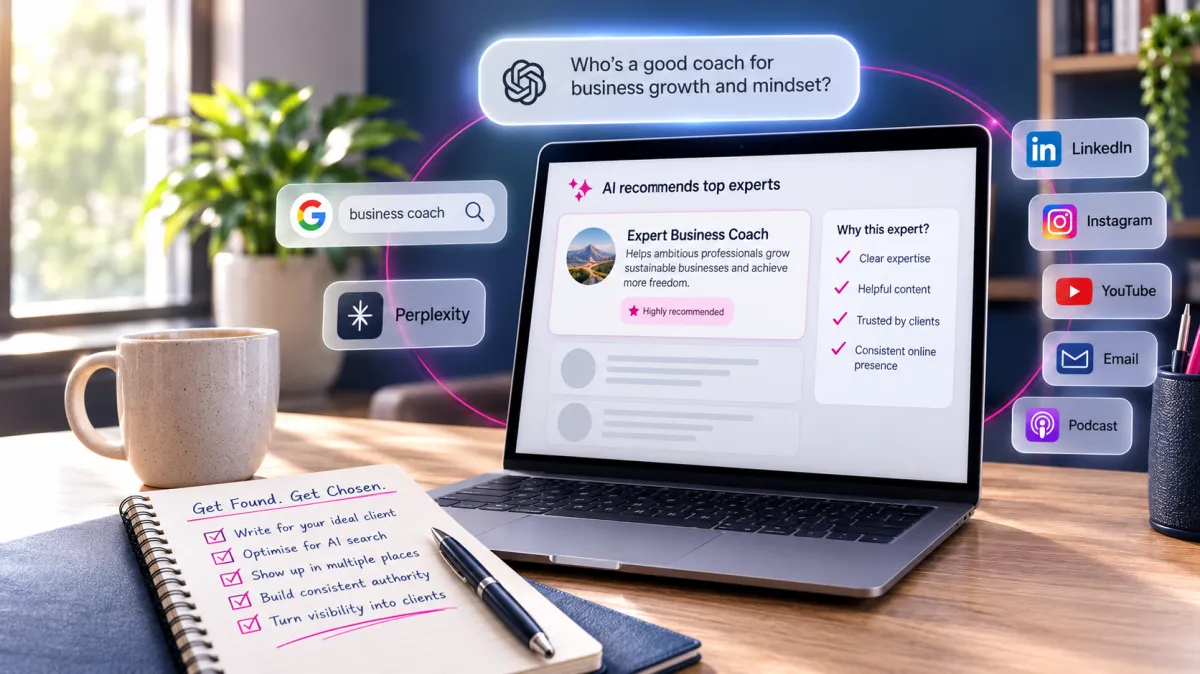
You're Doing Everything Right. So Why Isn't Anyone Finding You?
Key Takeaways
Getting found isn't about posting more. It's about writing for one real person, in words they'd actually use.
People now ask AI who to hire before they ever open a search bar. If your content can't answer their question, someone else's will.
One well-made piece of content beats five rushed ones — and it can turn into a week's worth of posts, emails, and clips.
Showing up in a few places, again and again, builds trust faster than trying to be everywhere at once.
Check what's working every so often, then do more of that. Skip the guesswork.
You wrote the post. You picked a good topic, you said something true, and you hit publish. Then... nothing. No new emails in your inbox, no new faces on your calendar.
That's not because your work isn't good enough. It's because good content and found content are two different things, and most experts were never taught the difference.
Write for One Person, Not "Everyone"
Here's a question worth sitting with: who, exactly, are you trying to reach? Not "small business owners" or "people who need coaching." One person. What are they worried about at 11 p.m.? What have they already tried that didn't work?
When you know that, the topic picks itself. A post called "10 Time-Saving Tips for Busy Professionals" is fine. A post called "Why You Keep Rescheduling Your Own Business Plan (And How to Actually Stick to It)" is the one your ideal client stops scrolling for. The second one sounds like it was written for a person, because it was.
You don't need a stack of survey data to get there. Read the questions your past clients asked you before they signed on. Look back at your DMs and comments. That's your research, and it's better than a spreadsheet full of strangers.
Make It Easy for People — and AI — to Find You
Getting found used to mean one thing: showing up on Google's first page. That's still true, but it's not the whole story anymore. A lot of your future clients aren't typing a search at all — they're asking ChatGPT or another AI tool, "Who's a good coach for X?" and getting a short list of names back.
That matters because a large share of Google searches now end without anyone clicking a single website — people just read the answer on the results page and move on. So if your content only exists to "rank," you're optimizing for a habit that's fading. The better goal is to be the answer itself, whether that answer shows up in a search result, an AI response, or a friend's recommendation.
The good news: the way you earn both is the same. Write like your ideal client talks, not like a textbook. Answer the actual question in the first few lines instead of circling it. Give your page a clear title and a short summary up top, and use it to describe an image the same way you'd describe it out loud. None of that requires a technical background — it just requires writing plainly and clearly, for a real person with a real question.
Show Up in More Than One Way
Not everyone wants to read. Some of your people would rather watch a two-minute video, listen on a walk, or skim a graphic on their lunch break. You don't need to create five different things — you need one strong idea, told a few different ways.
Take that post you just wrote. Read the strongest paragraph out loud and record it — that's a video. Pull three key lines and turn them into a graphic. Read the whole thing and post the audio. One idea, several doors in.
Get It in Front of People
A great post that sits alone on your website won't do much. Share it where your people already spend time: your email list, the one or two social platforms you actually enjoy, and maybe a guest spot on someone else's blog or podcast.
Your email list deserves special attention here — it's the one place a platform change can't take away from you. If someone signs up for your list, they've already raised their hand. Don't let that post go out to your website and stop there.
Check What's Actually Working
You don't need a dashboard full of numbers to know if this is working. Watch three things: are more people finding your website, are they sticking around to read, and are any of them reaching out afterward? Your website's built-in stats (most platforms include this) will show you the first two. Your inbox will show you the third.
If a certain topic keeps bringing people in, write more like it. If something falls flat, let it go and try the next idea. That's the whole system — no guessing required.
Show Up Like Clockwork
Trust builds slowly, and it builds through repetition. A client who sees you show up week after week starts to believe you'll still be there when they're ready to hire someone. That belief is worth more than any single "perfect" post.
You don't have to post daily to build that trust. Pick a pace you can actually keep — weekly is plenty — and protect it. A steady, honest voice beats a burst of content followed by three months of silence.
Team Up With People Your Clients Already Trust
You don't have to build an audience from zero, alone. Look for other experts, podcast hosts, or newsletter writers whose audience overlaps with yours but who aren't direct competitors. A guest appearance, a joint webinar, or even a shared email swap can put you in front of people who are already primed to trust a recommendation.
Start small — offer to write one guest post or come on one podcast episode. You're not trying to "collaborate with everyone." You're trying to borrow a little trust from someone your ideal client already believes in.
You don't have to figure this out by trial and error. If you're not sure whether your content is actually reaching the people (and the AI tools) that could send you clients, that's exactly what we help with. Book a free Authority Visibility Audit, and we'll show you where you're already showing up, where you're invisible, and what to fix first.
Book Your Authority Visibility Audit →
Michele Dobros is the founder of Visibility Edge, helping coaches, consultants, and experts become more discoverable across Google, AI search, and social platforms.
