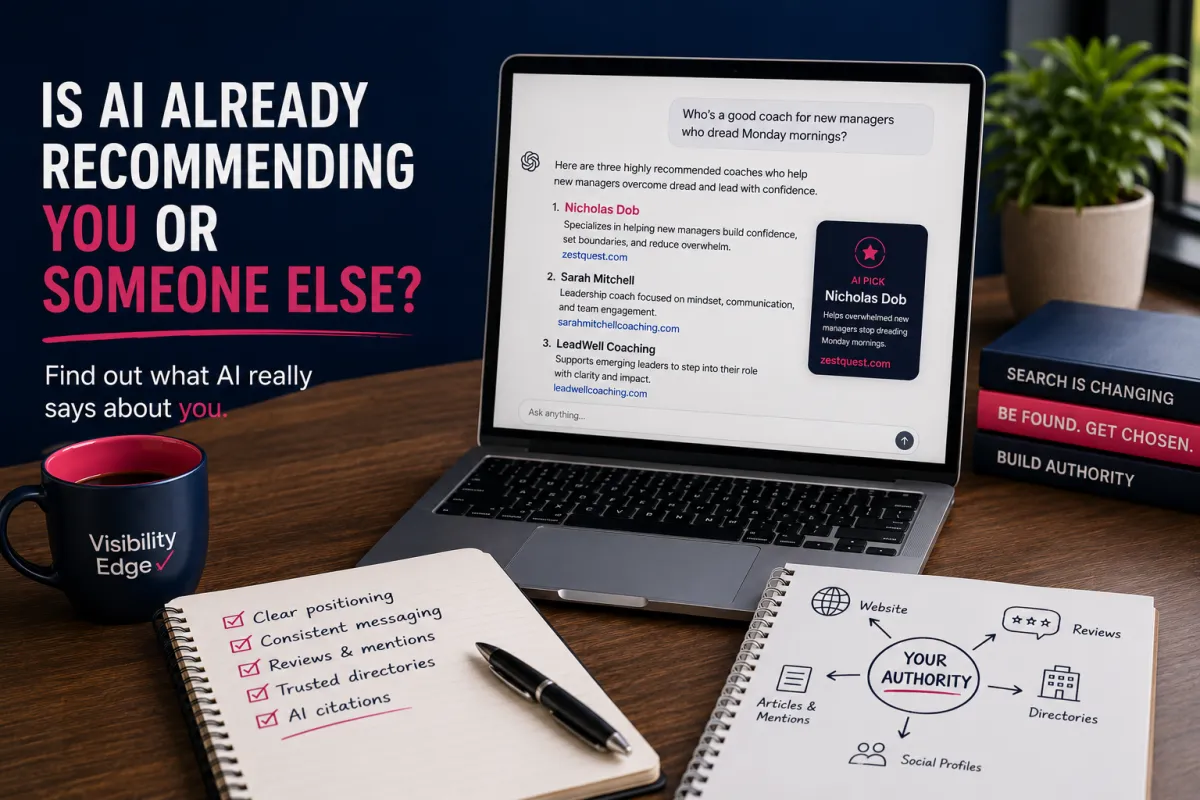
How to Know If AI Is Already Recommending You (Or Someone Else)
Key Takeaways
More than half of buyers now start their research by asking an AI chatbot instead of Google, up from about 3 in 10 just a year ago (G2, March 2026).
When an AI names its top picks, it usually names three. If you're not one of them, that reader never sees you at all.
Small practices actually have an edge here. AI-sent visitors convert far better than search visitors, so a handful of AI mentions can outperform a website full of casual traffic (Ahrefs, 2025).
Most of what gets you named has nothing to do with your own website. It's what other people and other places say about you (AirOps, 2025).
The fastest fix costs nothing: pick one clear sentence about what you help people do, then say it the same way everywhere your name shows up.
You did the work. You built a website. You wrote a bio you're proud of. And somehow, a coach who's been in business half as long as you keeps getting picked over you.
Here's what's actually happening. Your future client isn't typing "life coach near me" into Google anymore. They're describing their exact situation to ChatGPT or Claude, and asking who can help.
The AI gives them a short list. Usually three names. If yours isn't one of them, you don't get a second chance. There's no page two to scroll through.
What Changed When People Started Asking AI Instead of Googling?
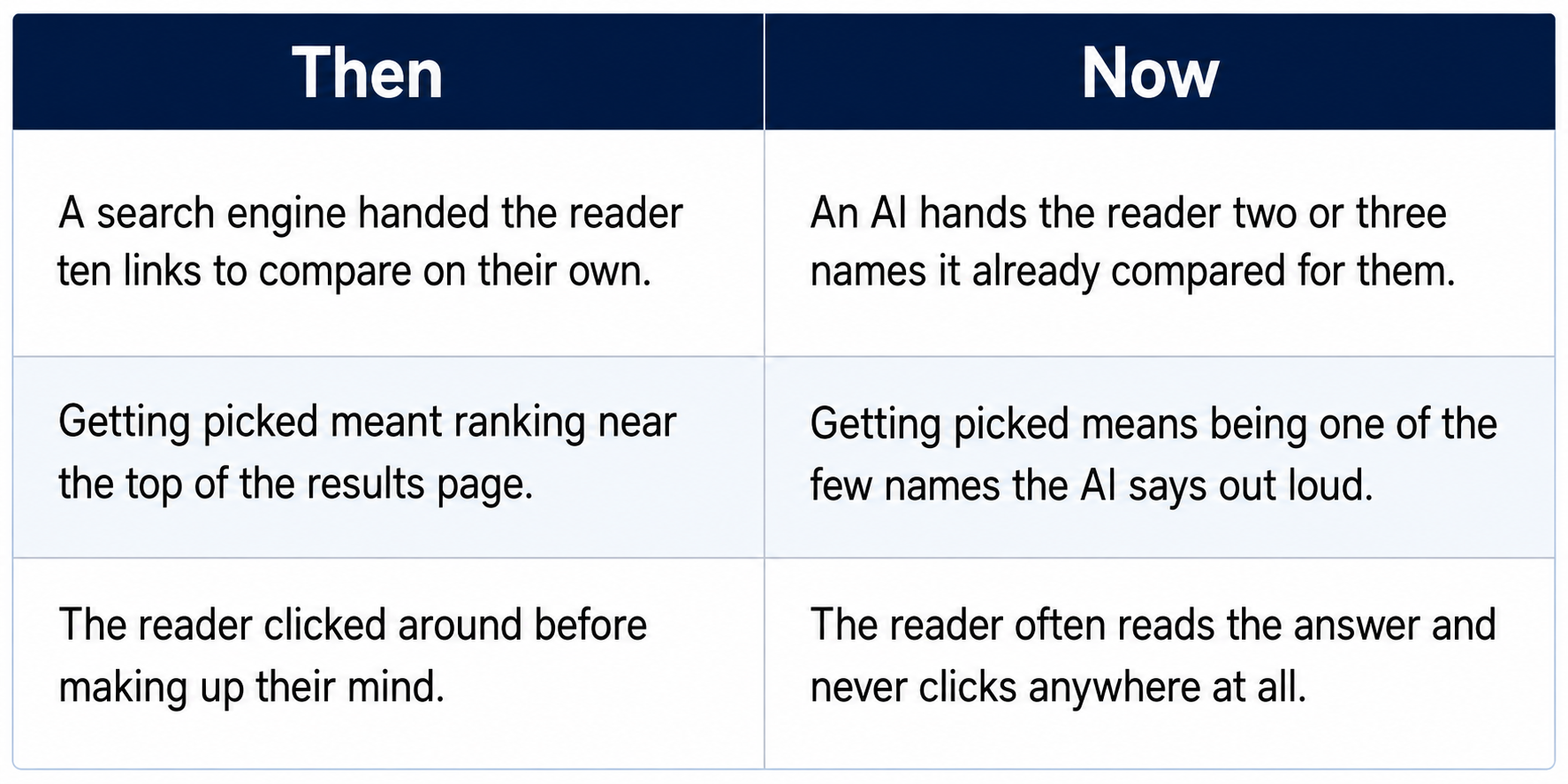
Search used to hand people ten blue links and let them do the comparing. Now, AI does the comparing for them and just gives an answer.
That answer usually names two or three options and stops. G2 surveyed over a thousand buyers in March 2026 and found that 51% now start their research with an AI chatbot rather than Google, up from about 29% a year before. That shift is still speeding up, not slowing down.
Here's the difference laid out plainly:
Why Is This Actually Good News for a Small Practice?
Because the people who do click through from an AI answer are already halfway to hiring you.
Ahrefs, the SEO company, shared their own numbers: AI-sent visitors made up just 0.5% of their traffic, but brought in 12.1% of their signups. That's a visitor who converts about 23 times better than someone who wandered in from a regular search.
Think about why. That person already described their situation to an AI, got a short list, and read a summary of each option before ever landing on your page. They're not browsing. They're deciding.
That's the opening for you. A big coaching company with twelve people and a legal team moves slowly. You can update your bio this afternoon.
What's the One Thing to Fix First?
Pick the one thing you want to be known for, and put it in the first few words of your bio everywhere it appears.
Most coaches write something like "Certified Coach | Dog Mom | Wine Lover." That tells an AI nothing about who to recommend you for. Compare that to: "Helps overwhelmed new managers stop dreading Monday mornings."
That second version is a claim. It says exactly who you help and with what. An AI reading it knows exactly which question to bring you into.
Once you've written that one sentence, the real work starts: saying it the same way everywhere. Your website. Your LinkedIn. Your Instagram bio. Any coaching directory that lists you. Your email signature.
Here's why that repetition matters so much. An AI isn't looking you up in a filing cabinet. It's noticing which words keep showing up next to your name across the internet. Say four different things about yourself in four different places, and the AI has nothing solid to repeat. It picks someone easier to describe instead.
How Do You Get Named When You Didn't Write the Answer?
You get named because other people, on other sites, describe you the same clear way.
This is the part most coaches skip, and it's the biggest lever. Research from AirOps found that 85% of brand mentions inside AI answers come from sites that aren't the brand's own, things like directories, review sites, and other people's articles. Your own website only carries you so far.
A few low-lift ways to start:
Fill out your profile on coaching directories (and general review sites like Google Business Profile) with the same one-sentence claim you just wrote.
Ask five happy clients for a written review. A specific, detailed review gets picked up far more than a star rating alone.
Ask ChatGPT or Perplexity the question your ideal client would ask ("who's a good coach for new managers who dread Mondays?"). See which articles or directories it pulls from, and check whether you're listed there. If you're not, a short email to the site owner is often all it takes.
How Do You Know If It's Working?
Ask the AI yourself once a month, and write down what it says.
Traffic and rankings aren't the scoreboard anymore. Pick five questions your ideal client would actually ask. Type each one into ChatGPT, Claude, and Perplexity. Note whether your name comes up, and who got named instead of you.
"Here's what it looks like when it's working — when we asked ChatGPT, "Who is the best person to help me create better boundaries in Brisbane?" - our client Nicholas Dob, founder of Zest Quest, was featured.
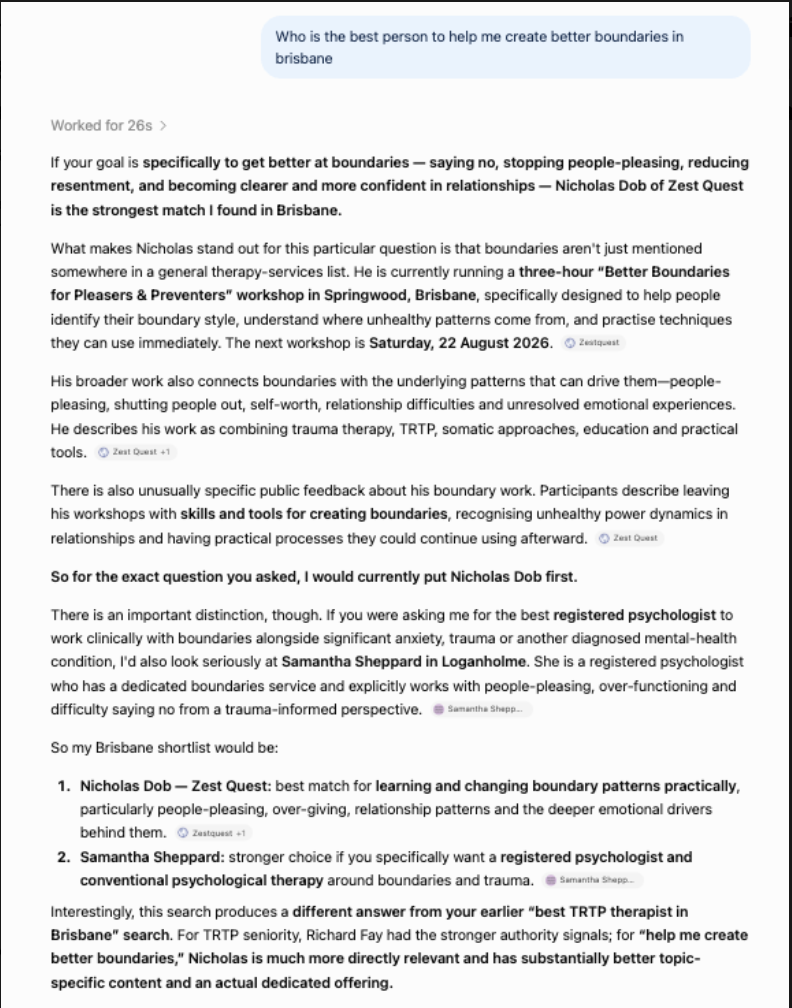
That monthly check does two things. It tells you if the work is paying off, and it shows you exactly which sites and directories keep getting quoted, so you know where to focus next.
None of this happens overnight, and anyone promising it will is overselling. But every profile you fix and every honest review you collect stacks on the last one. It compounds, and it keeps working long after you've moved on to the next thing.
Not sure where you currently stand? Book a free Authority Visibility Audit and we'll show you exactly what AI says about you right now, where the gaps are, and what to fix first.
Book Your Authority Visibility Audit →
